
 +91-8448808928
  noida@fusiontraining.in

Fusion Industrial Training
Industrial Automation Course
Build job-ready skills for smart factories
Hands-on labs
Industry mentors
Placement assistance
Who Is This Course For?

Ideal Learners
- Final-year and recent graduatesEEEECEMechanicalMechatronicsInstrumentation
- Diploma holders in related disciplinesTechnical education with foundation in electrical or mechanical systems
- Working professionals upskilling to controlsFrom maintenance, production, and quality assurance roles
- Career switchers from IT/electrical backgroundsLeveraging transferable skills for industrial automation roles
- Freshers targeting first automation roleBuilding foundational skills for entry-level positions
Prerequisites: Basics of electrical circuits and programming logic recommended.
Professional
Technical
Innovative
Benefits & Why Choose Fusion
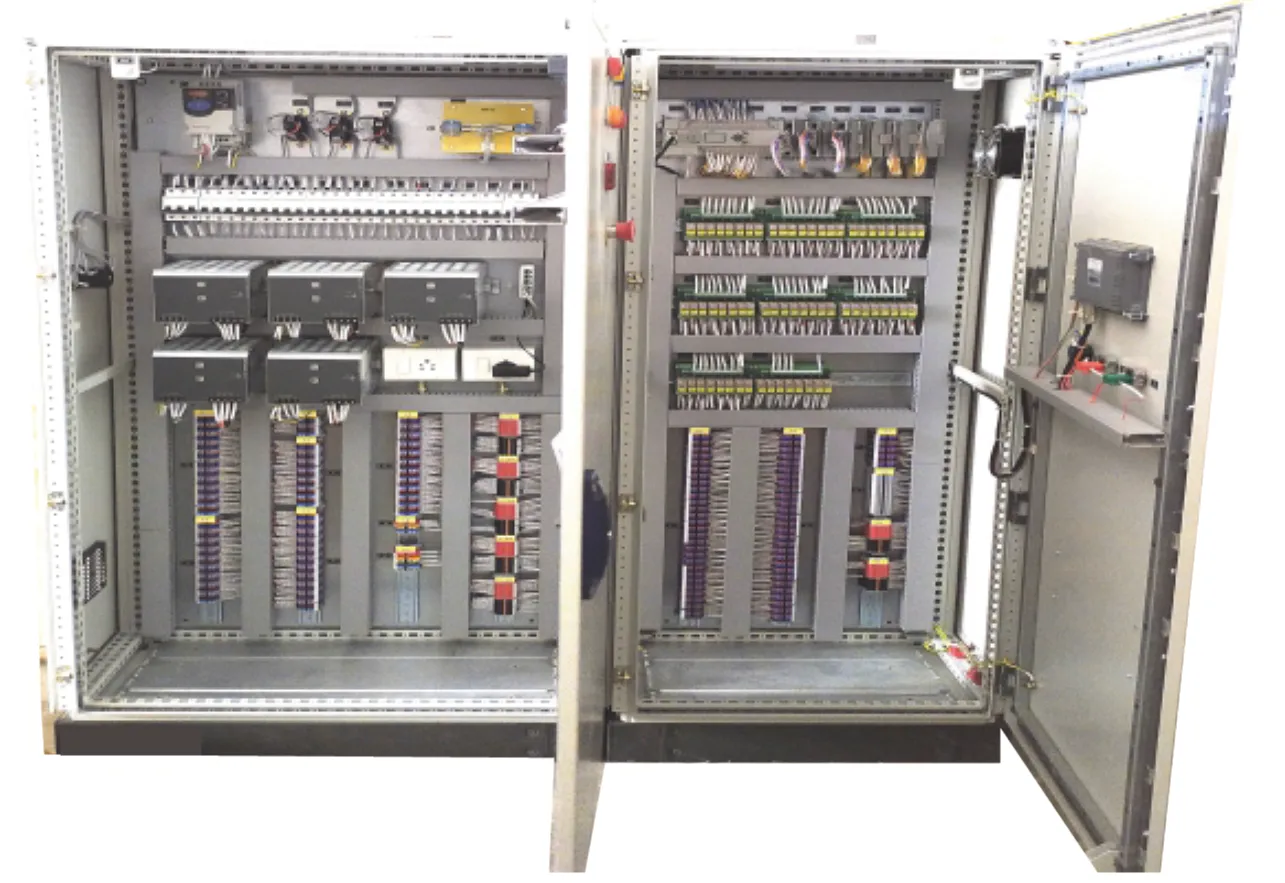
Key Benefits
- Hands-on labs with real PLCs, HMIs, Drives, and Sensors
- Industry-aligned curriculum mapped to real job roles
- Expert mentors providing personal attention in small batches
- Capstone project and portfolio review
Why Fusion
- Modern lab setups and SCADA workstations
- Interview preparation and 100% placement assistance
- Practical assessments and code reviews
- Strong alumni network and regular industry events
Lab Equipment
Curriculum
Placement
How We Guide Your Career Path
1. Explore
Counseling & skills assessment to identify your starting point and career goals.
2. Learn
Structured modules & LMS resources with expert-led instruction.
3. Build
Mini-projects on PLC/HMI/SCADA to reinforce practical application of concepts.
4. Practice
Simulators + real lab commissioning experience for hands-on mastery.
5. Certify
Vendor-neutral certification prep to validate your skills in the industry.
6. Apply
Resume/portfolio development and mock interviews to prepare for job market.
7. Launch
Job referrals & ongoing alumni support to kickstart and sustain your career.
Our comprehensive approach ensures you’re fully prepared for the industrial automation industry.
Achieve Your Goals After Completion
Outcomes you can expect after completing our Industrial Automation course:
Portfolio
Build a professional portfolio showcasing your technical skills: 1 comprehensive capstone project, mini-projects on PLC/SCADA/HMI, and documentation.
Certifications
Vendor-neutral certification prep, safety awareness, and completion certificate from Fusion Industrial Training.
Job Readiness
Resume & LinkedIn optimization, mock technical interviews, and soft-skill coaching.
Placement Assistance
Role mapping, direct referrals, and personalized job alerts with industry partners.
Real-world Exposure
Commissioning labs, troubleshooting drills, industry site visits, and guest sessions.
Our comprehensive training approach has helped 90% of our graduates secure relevant positions within 3 months
Career Profiles You Can Pursue
PLC Programmer
₹2.5–6 LPA
Develop logic programs using ladder logic, function blocks, and structured text.
SCADA Engineer
₹3–7 LPA
Design supervisory control systems, alarm management, and data historians.
Automation/Controls Engineer
₹4–9 LPA
System design, commissioning, and process optimization.
Robotics Technician/Engineer
₹4–10 LPA
Robot programming, PLC integration, maintenance, and repair.
Control Systems Engineer
₹4.5–9.5 LPA
P&ID development, loop tuning, and safety systems design.
Systems Integrator
₹5–10 LPA
Multi-vendor integration, IIoT, and network architecture.
Industrial Automation Technician
₹2.5–5.5 LPA
Installation, troubleshooting, and maintenance of automated equipment.
Industry Demand
30,000+ automation-related job openings across India. Our course prepares you for these roles.
Salaries shown are indicative. Actual packages depend on skills, performance, and qualifications.
Future Trends Shaping Industrial Automation
Industry 4.0 & Smart Manufacturing
Smart factories with real-time decision making and IoT-connected equipment.
Industrial AI
AI for predictive analytics, anomaly detection and process optimization.
IIoT & Smart Sensors
Connected sensors enable predictive maintenance and efficient monitoring.
Edge + Cloud
Edge processing combined with cloud scalability for faster and reliable solutions.
Collaborative Robots (Cobots)
Robots that work safely alongside humans to boost productivity.
Digital Twins
Virtual replicas for simulation, testing and optimization.
5G-enabled Factories
Ultra-low latency connectivity for real-time operations and remote control.
Predictive Maintenance
AI systems predicting equipment failures to reduce downtime.
Our course modules are aligned with these trends to ensure your future readiness.
Take the Next Step

QR CODE
BONUS
Free demo class + career counseling session
Next Cohort Starting
Website
https://fusiontraining.in
Email
noida@fusiontraining.in
Phone / WhatsApp
08448808928 | 8851868521
fusiontraining.in to register.
Practice Question Part 1
- Provide a practical scenario where the application of a PLC (Programmable Logic Controller) is appropriate.
- What are the reasons for opting for relays instead of PLCs in certain situations?
- In brief, describe the fundamental characteristics of a PLC.
- Enumerate the benefits of using a PLC in comparison to traditional relays.
- Discuss instances where PLCs can efficiently substitute multiple components, highlighting both favorable and unfavorable applications.
- Could you explain the rationale behind representing outputs in ladder logic as “coils”?

Contact us for any Kind of help:
Answer :
- An example of where a PLC could be used is in an industrial manufacturing process where it needs to control and automate various tasks such as machinery operation, temperature regulation, and material handling.
- Relays might be preferred over PLCs in situations where the control logic is simple, cost is a significant concern, and there’s no need for the flexibility and scalability that PLCs offer. Relays are also used in areas where extreme environmental conditions or electrical noise could affect PLC performance.
- A PLC, or Programmable Logic Controller, is a specialized industrial computer used for controlling and automating various processes in manufacturing and industrial environments. It consists of a programmable processor, input and output modules, and a programming environment to create control logic.
- Advantages of using a PLC over relays include:
- Flexibility: PLCs are easily programmable and can adapt to changing requirements.
- Space and Wiring Savings: PLCs consolidate control functions, reducing the need for extensive wiring and space.
- Diagnostics: PLCs offer diagnostic capabilities to detect faults and errors.
- Remote Monitoring: PLCs allow for remote monitoring and control.
- Scalability: PLC systems can be expanded or modified without significant rework.
- PLCs can effectively replace various components such as timers, counters, and relays. Good applications include complex manufacturing processes, conveyor systems, and automotive assembly lines. Bad applications might include very simple control tasks that can be managed with basic relays, where the cost of a PLC might outweigh the benefits.
- Ladder logic outputs are represented as “coils” because the graphical language of ladder logic is derived from the electrical control panel schematics used in traditional relay-based control systems. In electrical diagrams, coils represent devices like relays or solenoids, and this convention was carried over into ladder logic to maintain familiarity for engineers and technicians who were transitioning from relay-based systems to PLCs. The term “coil” in ladder logic corresponds to the energized output of a relay or a similar control device.

Leave a Reply